The UCL Centre for Holocaust Education welcomes the Government’s Social Cohesion Action Plan and, in particular, its explicit recognition of the importance of Holocaust education within that work.
At a time when division, misinformation and hatred place increasing pressure on democratic values and community life, the inclusion of Holocaust education in the strategy is both significant and necessary.
The recent Curriculum and Assessment Review reaffirmed that the Holocaust will continue to be a compulsory topic at Key Stage 3 in England. That welcome commitment underlines the important role education plays in helping young people develop robust knowledge and understanding of the past.
Establishing this is critical. Partly so that young people are able to identify attempts to distort the Holocaust or instances of mis/disinformation being spread about it; and partly because with knowledge and understanding of the Holocaust come profound insights into what it is and what it means to be human.
At its most effective, teaching and learning about the Holocaust enables students to confront difficult truths about human behaviour; to understand the causes and contexts that can bring about man-made atrocity; and to engage with the aftermath and legacies of the Holocaust.
However, our research shows many students still have significant gaps in their historical knowledge and some hold troubling misconceptions. These findings – as featured in The Times and in Schools Week – make it clear that there are a number of important issues in and around Holocaust education that need to be engaged with and addressed.
It is for this reason that the UCL Centre for Holocaust Education is convening a national conversation on Holocaust education. Its purpose is to examine why the Holocaust should be taught, what the aims of Holocaust education are, and how teaching and learning can respond to both the realities of the classroom and the world our students inhabit.
Therefore, while we welcome the Government’s recognition that Holocaust Education can play a role in any serious approach to social cohesion, this should now be matched by sustained support for schools and teachers, so that Holocaust education is rigorous, meaningful and accessible to all young people.
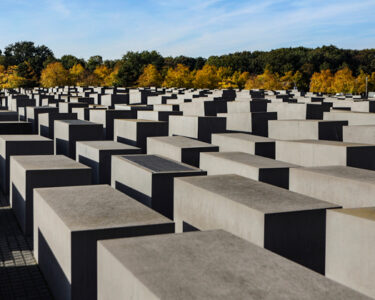
Image from: https://mhclgmedia.blog.gov.uk/